John McGahern
The Greatest Beer Run Ever: A Memoir of Friendship, Loyalty, and WarJohn McGahern is the author and retrospective narrator of Memoir, a writer who reconstructs his life through remembered scenes, family testimony, letters, and official records. His account follows a movement from childhood under the divided influence of his parents, through the choice of teaching as a practical route to writing, to a return to the small fields and lanes of Leitrim. The memoir’s portrait of him depends not on a claim to complete recollection, but on the adult narrator’s frank attention to what remains uncertain, what others remember, and what documents disclose.
Identity and Background
Born in Dublin in 1934 and brought up in the Republic of Ireland, McGahern trained as a primary-school teacher before becoming a full-time writer. He later taught and travelled extensively and lived in County Leitrim. His professional life encompassed six novels and four collections of short stories, as well as numerous awards and honours. Among Women won the GPA and the Irish Times Award, was shortlisted for the Booker Prize, and was adapted as a four-part BBC television series. In 2005, Memoir received the South Bank Literature Award. McGahern died in 2006.
The memoir identifies his upbringing, his parents, the people around them, and their landscape as its central subject. His sisters Rosaleen, Margaret, Monica, and Dympna helped read and correct the manuscript and assisted with letters; they also brought two important scenes back into view after they had slipped from his memory. This collaboration makes the family more than the memoir’s subject: relatives also help shape what the narrator can recover and tell.
Childhood, Memory, and His Mother
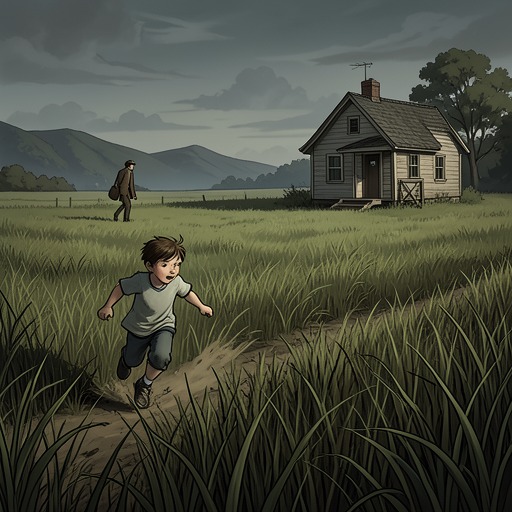
One of McGahern’s first remembered scenes with his father belongs to a summer in the Cootehall barracks. He was a small child with curls; his father, in uniform, decided to cut them despite the boy’s frightened protests and the visible distress of his mother and grandmother. He took McGahern into the dark hallway, locked the two women in the living room, and cut the curls with small silver shears. The adult narrator presents this as a defining early encounter with paternal power, but sets it against a larger absence: he had no memory of his father staying in the bungalow, and remembers walking the lane to Lisacarn alone with his mother.
At seven, during a long stay in the barracks, McGahern’s childhood world was overturned. His mother, Susan McGahern, had been diagnosed with breast cancer and was in the Mater Hospital in Dublin for tests and treatment. The children did not know where she was; their father told them not to ask and instead to pray. Her letter from hospital shows that she knew her son was beginning to question the secrecy and hoped soon to return home. McGahern remembers a brief return for the birth of his sister Dympna, especially the journey from a nursing home in Boyle in his father’s small Ford, with his mother carrying the baby in a white shawl. His memory of the short stay itself is indistinct, a vague happiness rather than a continuous account; after about a week, his mother left again, and Dympna was cared for by Bridgie McGovern.
The memoir repeatedly marks the limits of childhood recollection. McGahern’s account of his mother’s illness is supplemented by correspondence: his father wrote to a doctor seeking an assessment of whether she should give up teaching and what her chances of recovery might be. The narrator describes the letter as defensive and slightly bullying, while acknowledging that an earlier report from the doctor may help explain its tone. Letters thus add information but do not settle interpretation; they reveal what family members asked and withheld, while leaving the adult narrator to assess their manner and motives.
Family Authority and Documentary Evidence
McGahern depicts his parents as sharply opposed in temperament and religious practice. Susan’s faith was private and sustaining, a refuge she turned to when life became difficult. His father’s religion was public and forceful, associated with uniform, observance, and authority. The narrator also stresses his father’s secrecy: he never heard him discuss his early life or his schooling in Moyne. Only after his father’s death did a Garda Museum curator send him the complete Garda file. Among its contents was his father’s handwritten application, which recorded three years in the Irish Republican Army. McGahern had known that his father fought in the war but not its particulars; the record clarified a path from Latin school to the Irish Republican Army and then to the Garda Force at the beginning of the Civil War.
The contrast between remembered behaviour and official records is especially telling in the father’s Garda notebook. Shortly before retirement, he recorded stopping his car because Pat Moore, standing with a bicycle, had not moved when he sounded the horn. McGahern judges the incident unnecessary and pedantic: another guard might have waved or stopped to talk, and no one was in danger. The entry captures authority exercised in a small, everyday demand for compliance. After retirement, his father could no longer rely on the uniform’s protection and stood among others as an ordinary man.
McGahern also shows how family memories could be incomplete or corrected only years later. When his mother died, Margaret and Monica were at Aughawillan School and were intercepted before they reached home; they stayed with the Bradys through the funeral without understanding what had happened. McGahern says he did not learn until much later why they had been kept apart from the others: his father had insisted that the girls not be separated, while also arranging where the children would live. The episode exposes the distance between a child’s immediate experience and the family decisions that become legible only through later explanation.
Teaching, Writing, and Return
In 1953, McGahern chose a teaching career while holding to a less certain ambition: to write. He did not tell his father the real reason for his decision. Teaching offered short hours and long holidays, and seemed to make a living possible without surrendering the time he needed. His father expressed relief that he was being responsible and considering the needs of the other children. McGahern recognized that the choice suited his purpose, even as he felt guilt about turning away from the priesthood and the promise to say Mass for his mother. He partly reconciled that conflict by thinking of teaching as his mother’s profession and as a kind of second priesthood.
The decision carried particular force in a country marked by emigration. McGahern places his choice in 1953, when, he writes, half a million people left Ireland during the 1950s, most for Britain. He describes the emigrants as young and poorly educated, and his generation as one that disappeared in silence. His own work eventually made a life at home possible: he later returned with his wife to the Leitrim countryside, where they found a small farm on a low hill between two lakes, behind the Ivy Leaf Ballroom. They restored and extended its stone cottage, bought a few cows, and began their life there. Making a living from writing proved easier than he had expected, and emigration became a choice rather than a necessity.
This return gives the memoir its broad shape. McGahern says that his separate life is included to show how the journey away from the landscape of his upbringing became a return to its lanes, small fields, hedges, and lakes beneath the Iron Mountains. The place is not simply a backdrop to a career: it is the destination toward which the memoir’s personal history is organized. The adult writer’s home among those fields links the practical decision to write with an attachment to the landscape in which his childhood unfolded.
Retrospective Judgment and Narrative Significance
The memoir’s portrait of McGahern is inseparable from his effort to understand his father without pretending that knowledge amounts to comprehension. When news of his father’s death arrived, McGahern was surprised by the intensity of his conflicting grief, loss, and relief. He understood his reaction as connected both to the man who had died and to the years in which father and son had been entangled in an unwanted relationship. His father made many demands, gave little, and sought to dominate; nevertheless, even with more experience of him than of anyone else, McGahern says he could not claim to have fully understood him.
That uncertainty is part of the memoir’s method. A childhood memory may be vague, a scene may have been restored by a sister, and an official file may establish a fact without explaining a person. McGahern sets these kinds of evidence beside one another and distinguishes what he witnessed from what he later learned. The resulting self-portrait is neither a seamless recollection nor a simple account of escape: it is an adult writer’s continuing attempt to place remembered affection, family silence, documentary traces, and unresolved conflict within one life story.